
Yes — for the first time, you can deduct up to $10,000 a year in interest on a car loan, for tax years 2025–2028.
But only if the car is new, was finally assembled in the United States, is for personal use, and the loan started after 31 December 2024.
Used cars, leases, and related-party loans do not count. And do not confuse this with the old EV tax credit — that ended on 30 September 2025.
Car loan interest used to be one of the clearest “no” answers in tax: you could not deduct it. That changed with the One Big Beautiful Bill Act.
The new deduction is also the single most-confused new tax break of 2026.
Buyers mix it up with the dead EV credit, think it applies to used cars or leases, or do not know about the income limits or the new form their lender must send them.
This guide is the short version: the six checks, in order, that decide whether you qualify. It is general information, not tax advice — if your situation is complicated, talk to a tax professional before you file.
If you came here from the EV credit question, start here: there is no federal EV tax credit in 2026 — it ended 30 September 2025. This deduction is what replaced it for many buyers, and it works very differently.
The 6 checks — do I qualify?
| # | Check | The rule |
|---|---|---|
| 1 | Is the car new? | Original use must start with you. Used cars do not qualify. |
| 2 | Was it finally assembled in the US? | Final assembly must be in the United States. Check the VIN / manufacturer label. |
| 3 | Is it for personal use? | The vehicle must be for personal use, with a gross vehicle weight rating under 14,000 lbs. |
| 4 | When did the loan start? | The loan must have originated after 31 December 2024 and be secured by a first lien on the vehicle. |
| 5 | Is it a lease or a family loan? | Leases do not qualify. Loans from a related party do not qualify. |
| 6 | Is your income under the limit? | The deduction phases out above $100,000 modified adjusted gross income ($200,000 joint) and is gone at $150,000 ($250,000 joint). |
If the answer to any of checks 1–5 is “no”, you do not qualify.
If you pass all six, you can claim up to $10,000 a year of interest — and you can claim it whether or not you itemise, on Schedule 1-A, Part IV (TurboTax).
How much is it actually worth?
The deduction is up to $10,000 a year in interest, for tax years 2025–2028 (TurboTax).
How much that saves you depends on your tax bracket — a deduction is not a credit, so it reduces your taxable income rather than cutting your tax bill dollar for dollar.
Two worked examples, at a 22% marginal rate:
- $4,000 of interest paid in the year → $4,000 deduction → about $880 less tax.
- $10,000 of interest paid in the year → $10,000 deduction (the maximum) → about $2,200 less tax.
If you paid less than $10,000 in interest, you deduct what you actually paid — the $10,000 is a cap, not a flat amount.
The income phase-out, explained
The deduction shrinks by $200 for every $1,000 of modified adjusted gross income over $100,000 single / $200,000 joint, and disappears entirely at $150,000 single / $250,000 joint (TurboTax).
In plain terms: if you earn just over the threshold, you still get most of the deduction. If you earn well over it, you get none of it.
Check your MAGI before assuming you qualify — it is the number that decides this, not your salary alone.
The form your lender must send you: 1098-VLI
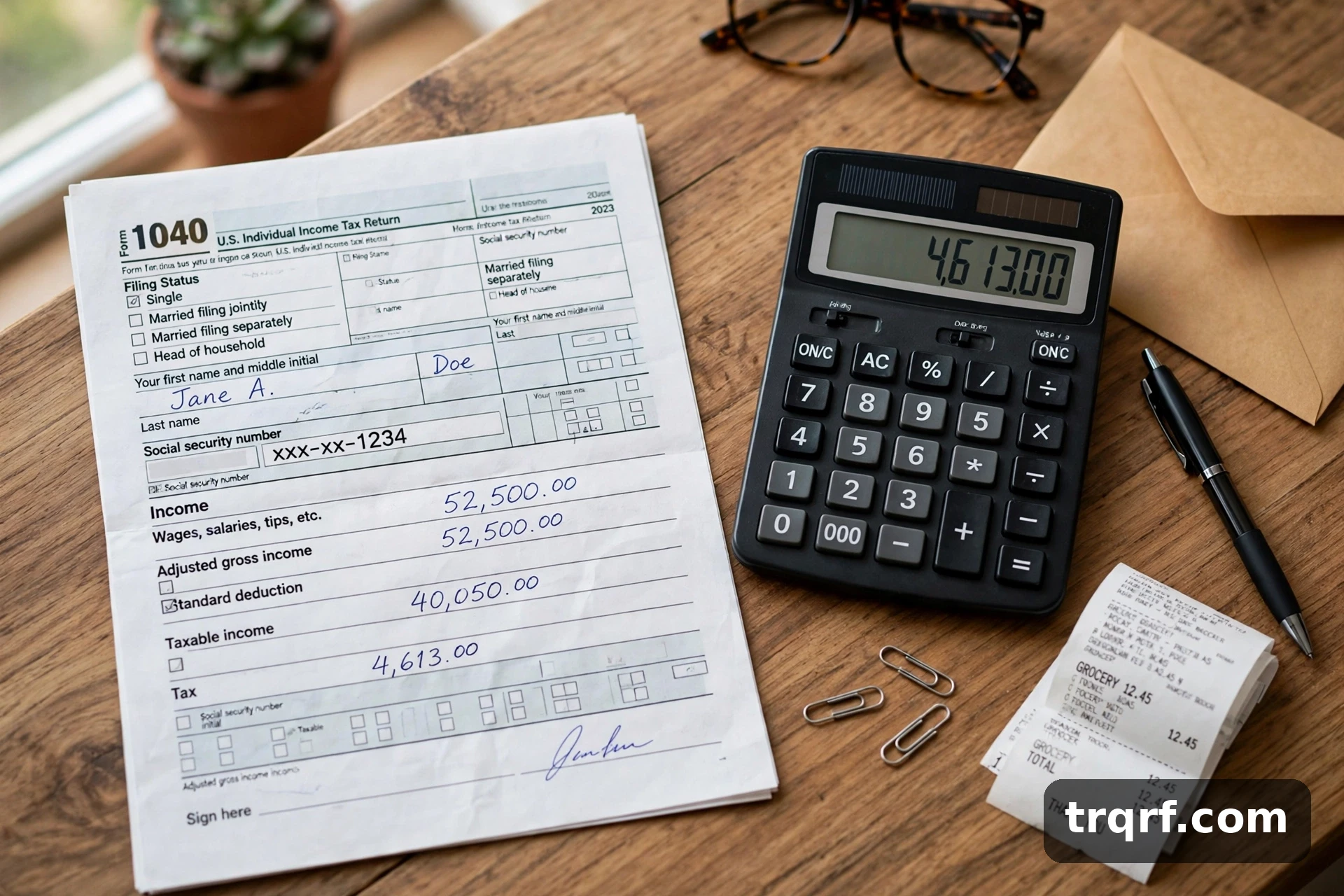
From tax year 2026, lenders must issue Form 1098-VLI for $600 or more of interest on a qualifying loan (TaxAct).
Keep it with your tax records — it is the document that supports the deduction, and it should show the interest you paid and the vehicle identification number.
If you bought in 2025, the form requirement had not yet started, so your records for that year will look different — keep the loan statement showing the interest paid.
What people get wrong
- “It replaces the EV credit, so my EV qualifies.” No — the EV credit ended 30 September 2025, and this deduction is separate. An EV can qualify for this deduction if it meets the six checks (new, US-assembled, personal use, and so on) — but the EV credit itself is gone.
- “My used car counts.” No. Original use must start with you.
- “My lease counts.” No. Leases are excluded, as are loans from a related party.
- “I have to itemise to claim it.” No. You can claim it whether or not you itemise, on Schedule 1-A, Part IV.
- “Any car assembled anywhere counts.” No. Final assembly must be in the United States — check the VIN before you buy, not after.
Frequently asked questions
Can I deduct car loan interest in 2026?
Yes, if you pass the six checks above: new car, finally assembled in the US, personal use, loan after 31 December 2024 secured by a first lien, not a lease or related-party loan, and income under the phase-out.
The maximum is $10,000 a year, for tax years 2025–2028.
Does it apply to used cars?
No. The vehicle’s original use must start with you — used cars do not qualify.
Does it apply to a leased car?
No. Leases are excluded.
What is Form 1098-VLI?
It is the form lenders must issue from tax year 2026 for $600 or more of interest on a qualifying vehicle loan. It shows the interest you paid and the vehicle’s VIN.
Is this the same as the EV tax credit?
No. The federal EV credits ($7,500 new, $4,000 used) ended for vehicles acquired after 30 September 2025. This car-loan interest deduction is a different, separate tax break — see our EV tax credit explainer for the full story.