
Yes — flu is starting early this year.
The CDC’s FluView data for the week ending 17 October showed flu infections growing or likely growing in 44 states.
Early-season activity is higher than typically seen at this time of year. It is not too late to get vaccinated: September–October is the usual window, but a shot later in the season still helps.
This is general information only, not medical advice — talk to your clinician about your own situation.
Flu season usually builds slowly through autumn and peaks in February. This year it did not wait.
Cases have been rising since late August and early September, especially in the West, and Louisiana and Hawaii were already at moderate activity by mid-October (Kohll’s Rx, summarising CDC FluView). In the week ending 17 October, 5.7% of flu tests were positive.
That matters because the vaccine changed this year too — all three components were updated.
And the usual questions (“is it too late?”, “is this flu or a cold?”, “my test was negative, so I am fine, right?”) have answers that are easy to get wrong.
This guide gives them in plain English.
Is flu season early this year?
Yes, by the CDC’s own measure. Early-season influenza activity is currently higher than typically observed at this time of year, with infections growing or likely growing in 44 states in the week ending 17 October (Kohll’s Rx / CDC FluView).
Cases started rising in late August and early September rather than waiting for November.
An early start does not automatically mean a severe season — but it does mean the window to get vaccinated before flu is widespread is shorter than usual.
If you were planning to get the shot “sometime in November”, this is the year to bring that forward.

What’s new in the 2026–27 flu vaccine?
For 2026–27, all three vaccine components were updated, including an updated H3N2 component for subclade K viruses that circulated widely last year. Vaccines are now trivalent — they protect against three flu virus types instead of four (University of Rochester Medical Center).
What that means in practice: last year’s shot is not this year’s shot, and a vaccine from a previous season does not cover the updated strains.
If you have not had a flu vaccine since the 2026–27 formula came out, you have not had this season’s vaccine.
When should I get a flu shot in 2026?
September–October is the usual window, and it is still the best time — but vaccination later in the season still helps (University of Rochester Medical Center). It is not too late in November, December, or even January, while flu is still circulating.
Flu typically peaks in February, so a shot in late autumn still gives you months of protection during the worst of it.
If you are in a higher-risk group — older adults, young children, pregnant people, or anyone with a long-term health condition — ask your clinician or pharmacist about timing rather than waiting for a “perfect” week that never comes.
Flu vs cold: how to tell them apart
| Flu | Common cold | |
|---|---|---|
| Onset | Sudden — fine in the morning, ill by the afternoon | Gradual, over a day or two |
| Fever | Common, often high | Rare, usually low or absent |
| Body aches | Common, often severe | Mild or absent |
| Tiredness | Can be extreme, lasting days | Mild |
| Sore throat / runny nose | Sometimes | Very common |
The table is a guide, not a diagnosis. Only a test — or a clinician — can confirm flu, and the symptoms overlap enough that guessing is unreliable.
At-home flu tests: what a negative result does — and doesn’t — mean
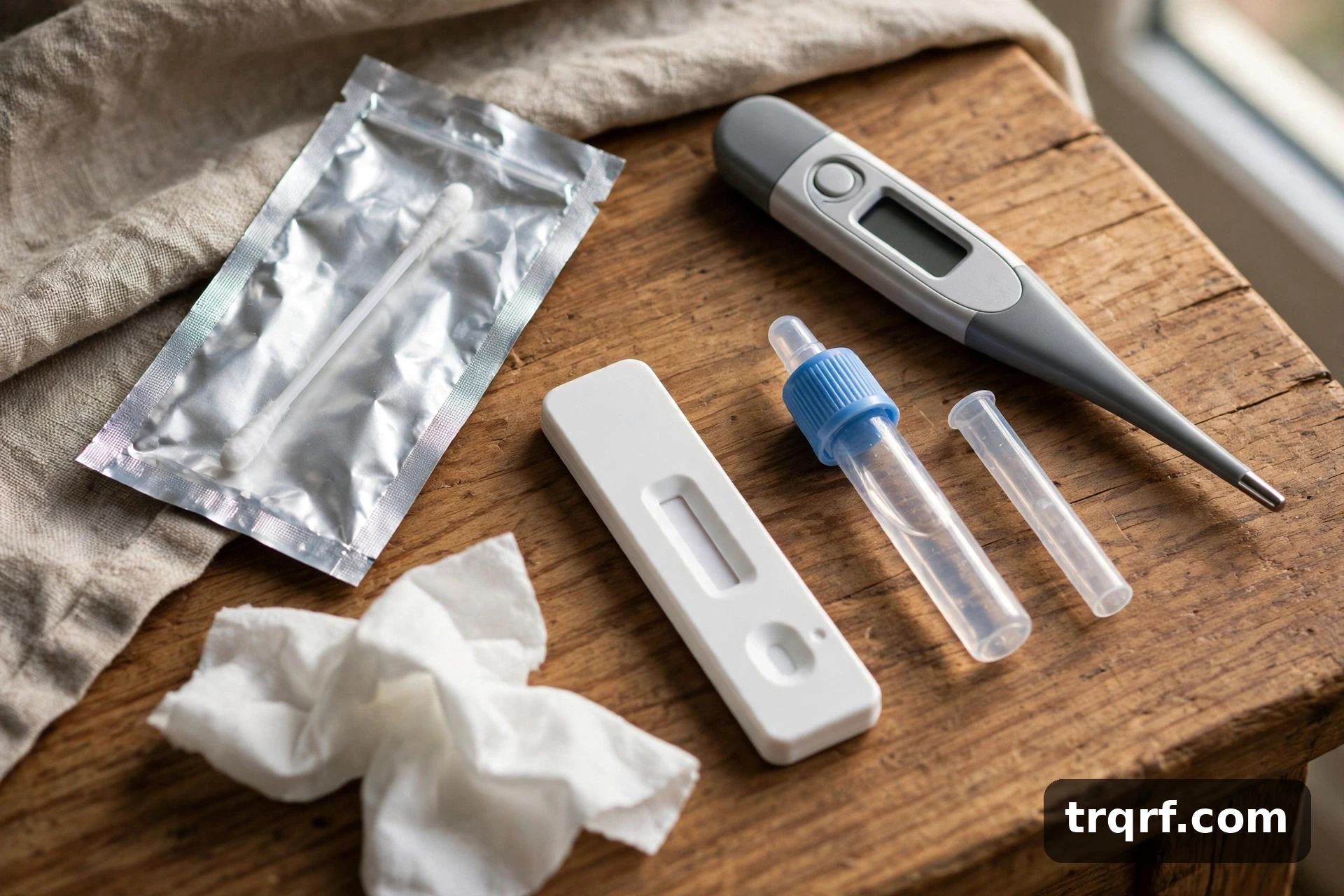
At-home flu tests are now widely available, and they are useful — with one important limit. They are about 70–80% accurate, which means a negative result does not rule out flu (University of Rochester Medical Center).
If you test negative but have flu symptoms — sudden fever, body aches, exhaustion — do not assume you are in the clear. Stay home, rest, and talk to a clinician, especially if you are in a higher-risk group or your symptoms are getting worse.
A positive result, on the other hand, is a strong signal: take it seriously and act on it.
What to do if you get flu
- Rest and stay home while you have a fever, and for at least a day after it goes without fever-reducing medicine — you are most contagious in the first few days.
- Antivirals work best early. They work best when started within 1–2 days of symptoms, so do not wait a week to call your clinician if you are in a higher-risk group (University of Rochester Medical Center).
- Watch for warning signs. Difficulty breathing, chest pain, dizziness, confusion, severe vomiting, or symptoms that improve and then come back worse are reasons to seek care promptly — especially for children, older adults, and pregnant people.
- Keep it simple. Fluids, rest, and fever relief as directed on the packaging are the mainstays for most healthy adults. Antibiotics do not treat flu — it is a virus.
This section is general information, not medical advice. If you are unsure, or you are in a higher-risk group, contact your clinician or pharmacist.
Frequently asked questions
Is it too late to get a flu shot in November?
No. September–October is the usual window, but vaccination later in the season still helps, and flu typically peaks in February — so a November shot still protects you through the worst of the season.
Do I need a flu shot every year?
Yes. The vaccine is updated each year — for 2026–27, all three components were updated — and protection fades over time. Last year’s shot does not cover this year’s strains.
My at-home flu test was negative. Am I fine?
Not necessarily. At-home tests are 70–80% accurate, so a negative result does not rule out flu. If you have flu symptoms, stay home and talk to a clinician, especially if you are higher-risk.
Flu or cold — which is it?
Flu usually starts suddenly, with fever, body aches, and extreme tiredness. A cold comes on gradually and is mostly a sore throat and runny nose. Only a test can confirm it.