
Use AI to make your list and compare options — then check the price yourself before you buy.
Track the price with Google, verify it against its price history, check the seller, and pay by credit card.
Never pay by gift card, wire, or crypto. AI is a good shopping helper and a bad fact-checker: it can be wrong about price and stock.
AI is part of Black Friday this year whether you use it or not. According to PwC’s 2026 Holiday Outlook, 29% of consumers plan to use AI somewhere in their holiday shopping, up from 22% last year (PwC, 2026 Holiday Outlook).
Google launched its Universal Cart in the US on 15 October 2026, and ChatGPT now does shopping research too. Used well, these tools save time and catch bad deals.
Used blindly, they can talk you into a “deal” that was never a deal — or a store that was never real.
This guide is the workflow a non-technical shopper needs: what to ask AI, what to check yourself, and the five-minute routine that separates a real bargain from a scam.
It pairs with our Black Friday buy / wait / skip guide — use that to decide what to buy, and this one to decide how to buy it safely.
What AI can actually do for you
AI shopping tools are good at the boring, time-consuming parts:
- Build a shortlist. Ask for the best-rated options in your budget, with the features that matter to you — then ask it to explain the trade-offs in plain language.
- Compare specs side by side. “Compare these three TVs: screen, refresh rate, ports, warranty” is exactly the kind of table AI does well.
- Track prices and stock. Google’s Universal Cart, launched in the US on 15 October 2026, works across Search and the Gemini app with price-drop and restock alerts — but it only completes a purchase after you confirm it (Wired Wisely).
- Draft your list. Give it your budget and who you are buying for, and let it turn a vague “gifts for Dad” into a concrete list with prices.
What AI cannot do — and where it gets things wrong
Here is the part most guides skip. ChatGPT’s shopping research is available to logged-in Free, Go, Plus, and Pro users, but OpenAI itself warns it can be wrong on price and stock (Wired Wisely).
That is the single most important fact in this guide.
AI can confidently show you a price that was true last week, a model that is out of stock, or a “deal” from a seller that does not exist.
It does not check the price history, it does not know whether the store is legitimate, and it cannot tell a real brand’s ad from a copycat. Treat everything it tells you as a lead to verify, not a fact to act on.
The 5-step workflow: AI first, then verify
| Step | What to do | Why it matters |
|---|---|---|
| 1. Build the list with AI | Ask for options in your budget, with the features you need and the ones you do not. | Stops impulse buying; you shop from a list, not from ads. |
| 2. Track the price with Google | Use Google Search / Gemini price-drop and restock alerts (Universal Cart, US, from 15 Oct 2026). | You get told when the price actually falls — not when a banner says it has. |
| 3. Verify the price history | Check Keepa or CamelCamelCamel for Amazon, or the retailer’s own price history. Was it cheaper last month? | Last year, 36% of Black Friday sale items offered no savings at all versus their earlier price. A “50% off” tag means nothing without the history. |
| 4. Check the seller | Is the store the real brand, an authorised retailer, or a marketplace seller with a new account? Search the store name + “scam” or “reviews” separately. | Social-media ads that copy real brands are a leading scam vector — see below. |
| 5. Pay safely | Pay by credit card. Never by gift card, wire transfer, or crypto. | A credit card gives you a chargeback if the goods never arrive. A gift card gives you nothing. |

Exact prompts to copy
You do not need clever prompts — you need specific ones. Try these, filling in your own details:
- “I have $300 for a TV for a bright living room. Compare the three best-rated 55-inch TVs under $300, with screen type, refresh rate, and warranty — and tell me which one you would skip and why.”
- “Is this a good price? This laptop is $649 today. What was its typical price over the last three months, and when is it usually cheapest?”
- “I am buying headphones as a gift for someone who commutes by train. What should I prioritise — noise cancelling, battery life, or comfort — and what is a fair price?”
- “Check this store for me: is [store name] a legitimate retailer for [brand], and what do independent reviews say about delivery and returns?”
Then do step 3 and step 4 yourself. The prompt is the start of the check, not the end of it.
How to spot a fake Black Friday deal
The scams this year are not badly spelled emails — they are polished ads that look exactly like the real brand.
The US Federal Trade Commission’s data, cited in recent shopping-safety reporting, shows people reported losing more than $95 million in 2025 to scams that started with a social-media ad order (Mekat, citing FTC data). Watch for these: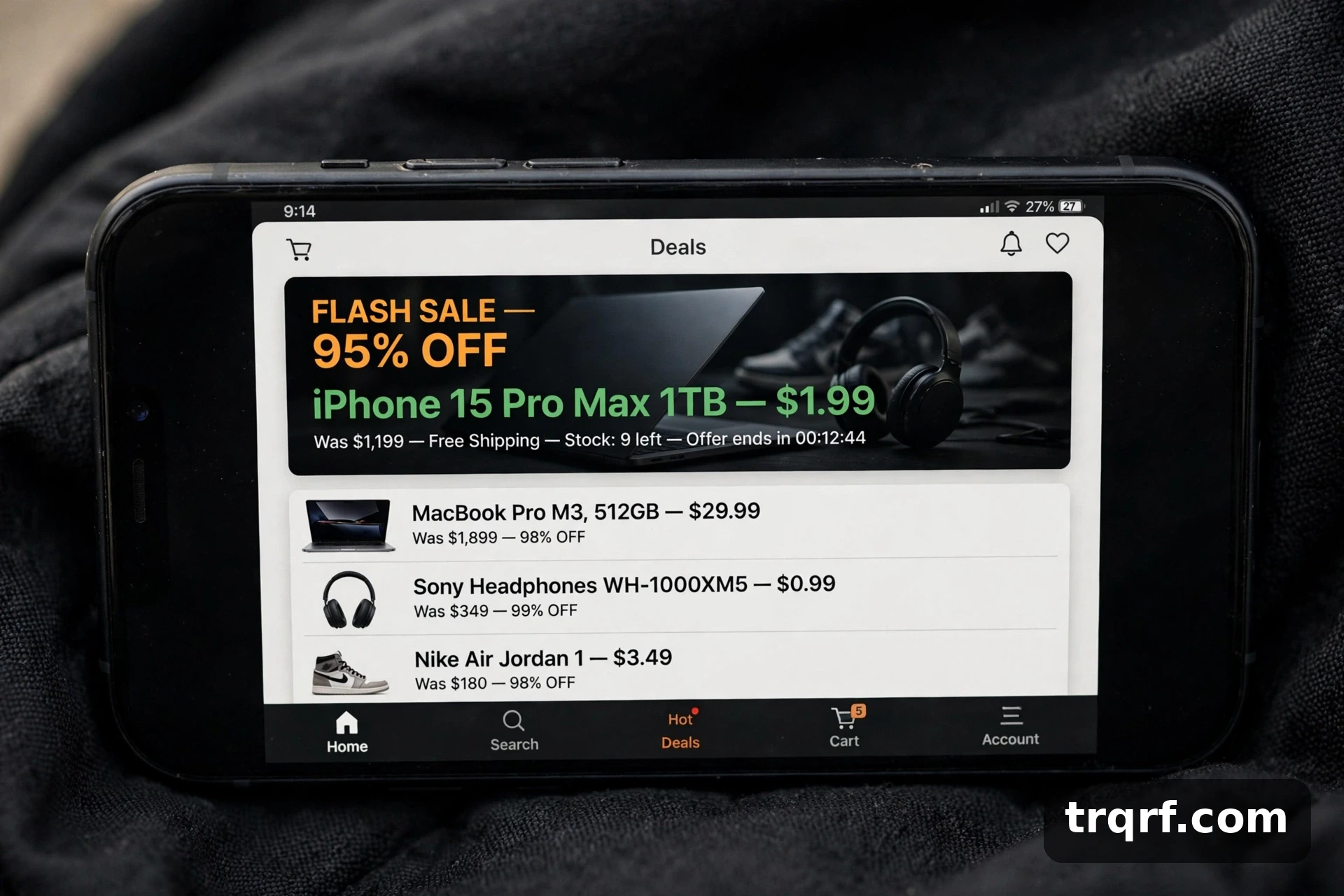
- A price that is too good to be true. A $1,200 laptop for $199 is not a deal — it is bait.
- A countdown that never ends. Refresh the page: if the “sale ends in 10 minutes” timer resets, the urgency is fake.
- A store you have never heard of, selling only one famous brand. Real retailers sell many brands; copycat stores sell one, at impossible prices.
- Payment by gift card, wire, or crypto. No legitimate retailer asks for this. Ever.
- No returns address, no phone number, no real reviews. If the only reviews are on the store’s own site, they are not reviews.
- A slightly wrong web address. Check the domain letter by letter — one changed letter is the oldest trick in the book.
If a deal fails even one of these checks, walk away. There will be another deal — Black Friday runs through Cyber Monday on 30 November, and the genuine discounts peak in Cyber Week.
AI shopping checklist — save this
- Make your list with AI, with a budget per item.
- Set a price alert; do not buy on the first “sale” banner you see.
- Check the price history before you pay.
- Verify the seller is real, separately from the ad that brought you there.
- Pay by credit card only.
- Keep the receipt and the order confirmation — and check your statement after delivery.
Frequently asked questions
Can I trust ChatGPT to find me the best Black Friday deal?
Trust it to find candidates, not to confirm the deal. It can be wrong about price and stock, so always check the price on the retailer’s own site and against the price history before you buy.
What is Google Universal Cart?
It is Google’s shopping feature in the US, launched 15 October 2026, working across Search and the Gemini app. It tracks prices and stock and can alert you to drops and restocks — but it only completes a purchase after you confirm it.
How do I know if a Black Friday deal is real?
Check the price history: was the item cheaper, or the same price, a month ago? Check the seller separately from the ad. And remember the WalletHub finding from last year — 36% of Black Friday sale items offered no savings at all.
What should I do if I already paid a scammer?
Contact your bank or card issuer immediately and ask about a chargeback, save every screenshot and email, and report the ad and the store to the FTC at reportfraud.ftc.gov.
If you paid by gift card or wire, tell your bank anyway — recovery is harder, but report it regardless.