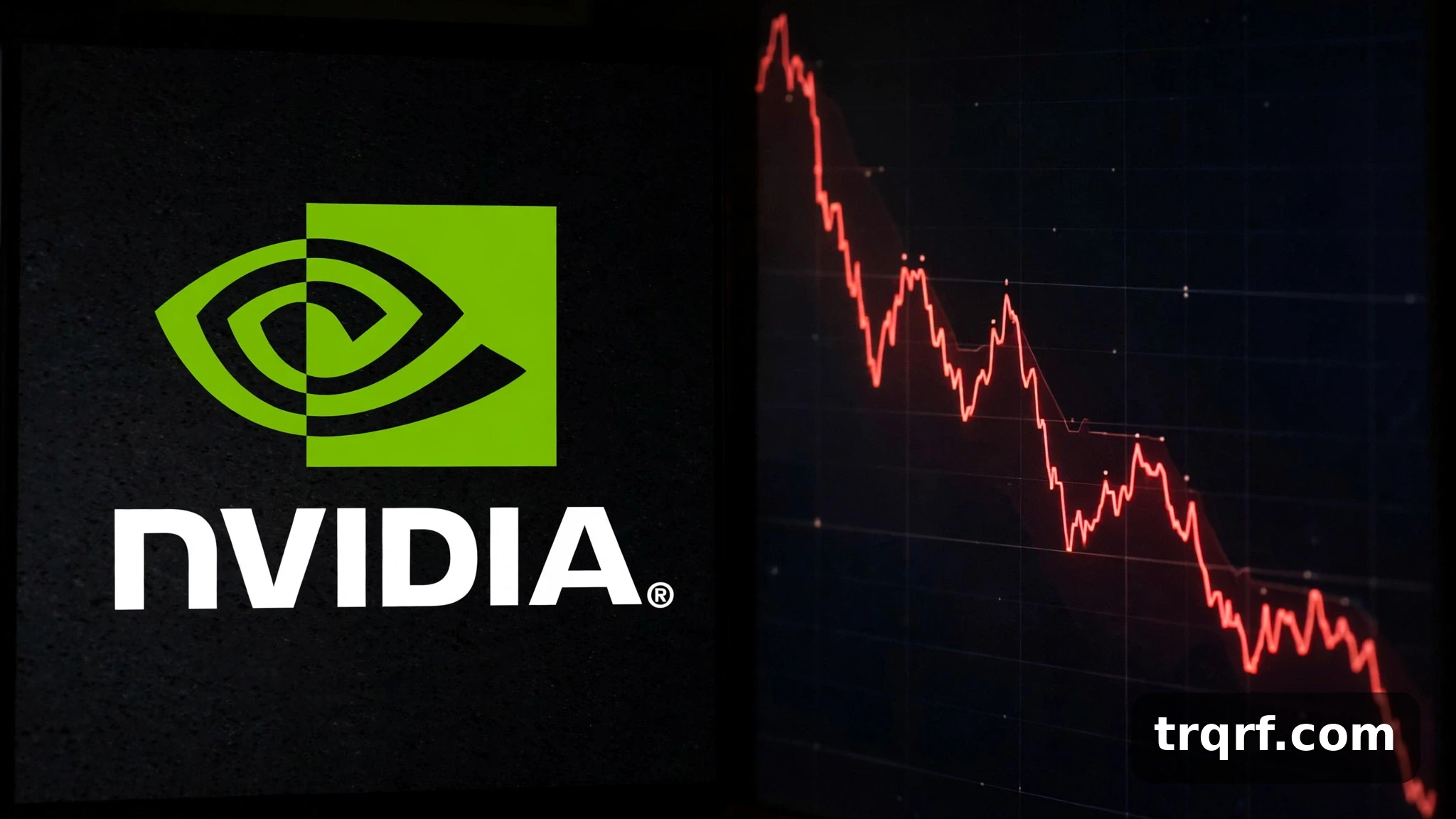
Quick answer: Nvidia’s stock fell sharply in the week of November 9–13, 2026, after the board opened an investigation into CEO Jensen Huang and Huang then resigned on November 12. The stock dropped more than 13% after the resignation news, wiping about $600 billion off the roughly $4 trillion chipmaker’s market value. Next: earnings on November 17, and a closed-door House briefing on November 18.
Nvidia is the company at the centre of the artificial intelligence boom: it makes the chips that power AI data centres, and it had become one of the most valuable companies in the world. So when its founder and chief executive resigned suddenly in the middle of a board investigation, the market reaction was immediate and severe — and “nvidia stock” became one of the most searched terms in the United States that week, with around 500,000 searches.
This article explains what actually happened, in order, what is confirmed and what is still only an allegation, and what to watch for next.
What happened, day by day
Monday, November 9. Nvidia shares slid 4.27%, or $7.97 per share — the first trading day after the board said it would investigate Huang over his relationship with Alice Huang, an executive US intelligence believes was spying for China. Investors sold first and asked questions later.
The days that followed. At least four securities firms announced investigations, and the Rosen Law Firm filed a class action in federal court in Northern California, covering people who bought Nvidia shares between October 9, 2025 and November 8, 2026. A class action is a legal claim, not a verdict — nothing has been decided — but the filings added to the pressure on the stock.
Thursday, November 12. Huang resigned, and CFO Colette Kress stepped in as interim CEO. The stock plunged more than 13% after the news, and the company shed about $600 billion in market value over the week — around one-seventh of the value of a roughly $4 trillion company, in a matter of days.
Why did the stock fall so far?
There was no single cause. Four things combined.
1. A founder-CEO left suddenly
Jensen Huang co-founded Nvidia in 1993 and led it for more than three decades. He is closely identified with the company’s strategy, its customer relationships, and its public image. When a leader like that leaves without warning, investors have to price in a new and unknown future — and markets tend to do that by selling first.
2. The investigation carries national-security overtones
The board’s investigation concerns Huang’s relationship with an executive whom US intelligence believes was spying for China. For a chip company at the heart of the US–China technology rivalry, that framing is far more alarming to investors than an ordinary governance dispute — and it is also where the facts are thinnest, which is why the confirmed-vs-alleged distinction below matters so much.
3. Lawsuits followed within days
At least four securities firms announced investigations, and the Rosen Law Firm’s class action followed quickly. Lawsuits do not prove wrongdoing, but they signal months of legal costs and headlines ahead, and one more reason for investors to step back.
4. The timing could hardly have been worse
The resignation came days before Nvidia’s earnings report on November 17. Investors were already waiting for the numbers; now they wait for them under an interim chief executive, with a House briefing the day after. Uncertainty before a big event is when markets are most nervous.
What we know vs. what is only alleged
Confirmed:
- Jensen Huang resigned as CEO on November 12, 2026, and CFO Colette Kress is interim CEO.
- Nvidia shares fell 4.27% on Monday, November 9, and plunged more than 13% after the resignation news. The company shed about $600 billion in market value that week.
- The board opened an investigation into Huang’s relationship with Alice Huang, an executive US intelligence believes was spying for China.
- At least four securities firms announced investigations, and the Rosen Law Firm filed a class action in Northern California covering buyers from October 9, 2025 to November 8, 2026.
- Nvidia reports earnings on November 17, with expected revenue of around $108 billion, and a closed-door House briefing is scheduled for November 18.
- The board said it had “no reason to believe national security or Nvidia secrets were compromised.”
Only alleged — not established:
- That Alice Huang spied for China. US intelligence is reported to believe this; it is an allegation, not a finding.
- That Huang’s relationship with her was an affair, or that it involved wrongdoing. Coverage describes a relationship under investigation; no finding has been made public.
- That Nvidia or its executives broke securities law. The class action is a claim filed in court. It is not a verdict, and the firms’ investigations are inquiries, not conclusions.
What does the class action mean for ordinary shareholders?
In plain terms: a law firm has sued on behalf of a defined group of investors — people who bought Nvidia shares between October 9, 2025 and November 8, 2026 — claiming those investors were harmed. The court has not decided whether that is true.
If you bought Nvidia shares in that window, the case exists and you may hear about it from the firm or other lawyers. That does not mean you are owed money, or that the company did anything wrong. Class actions like this are a routine feature of big US stock falls and often take years to resolve. This article is not legal advice; anyone affected should speak to a qualified professional rather than acting on headlines.
What happens next: November 17 and 18
November 17 — earnings. Nvidia reports its quarterly results, with expected revenue of around $108 billion. It will be the first earnings report under interim CEO Colette Kress, and the next hard information the market gets. Analyst price targets cited in coverage ranged from around $350 to $400 a share — but those are opinions, set before the resignation. The numbers on the 17th, and what management says about the business, will matter more than any target.
November 18 — House briefing. A closed-door House briefing is scheduled for the day after earnings. Little may be said publicly on the day, but any statement afterwards could move the story again.
After those two dates, the story’s value as breaking news falls away quickly. The earnings report is the event that matters most: it will show whether the business underneath the headlines is still growing at the pace investors expected.
What this means for the wider AI trade
Nvidia is the central supplier of the chips that train and run AI systems, so a leadership crisis there does not stay contained. Coverage noted the resignation weighed on technology stocks more broadly, as investors asked whether the AI boom’s flagship company faced a problem that could spread. That is a reasonable question, not an answer: nothing confirmed so far shows a problem with Nvidia’s products, customers, or order book. The confirmed facts are about leadership and governance; the market’s reaction was about uncertainty, not a failed product.
A company can lose a chief executive and keep selling chips. It can also lose one and turn out to have deeper problems. The earnings report on November 17 is the first real test of which one this is.
Frequently asked questions
Did Jensen Huang resign from Nvidia?
Yes. Huang resigned on November 12, 2026, after the board opened an investigation into his relationship with an executive US intelligence believes was spying for China. CFO Colette Kress is interim CEO.
Why is Nvidia stock down?
The stock fell 4.27% on November 9, the first trading day after the investigation was announced, and plunged more than 13% after the resignation on November 12, shedding about $600 billion in market value that week. The fall reflects the sudden loss of a founder-CEO, the national-security overtones of the investigation, the lawsuits that followed, and uncertainty days before earnings.
Was Nvidia caught spying, or were its secrets stolen?
No finding of that has been made. The board said it had “no reason to believe national security or Nvidia secrets were compromised.” The claim that Alice Huang spied for China is an allegation — a reported belief of US intelligence, not an established fact.
When is Nvidia’s next earnings report?
November 17, 2026, with expected revenue of around $108 billion. A closed-door House briefing follows on November 18.
Should I buy Nvidia stock now?
This article cannot answer that — it is a news explainer, not financial advice. Anyone considering buying or selling should do their own research and speak to a qualified financial adviser.
This article explains the news as reported on November 13, 2026. It is not financial or legal advice. The spy link, the affair, and the class-action claims here are allegations, not findings.