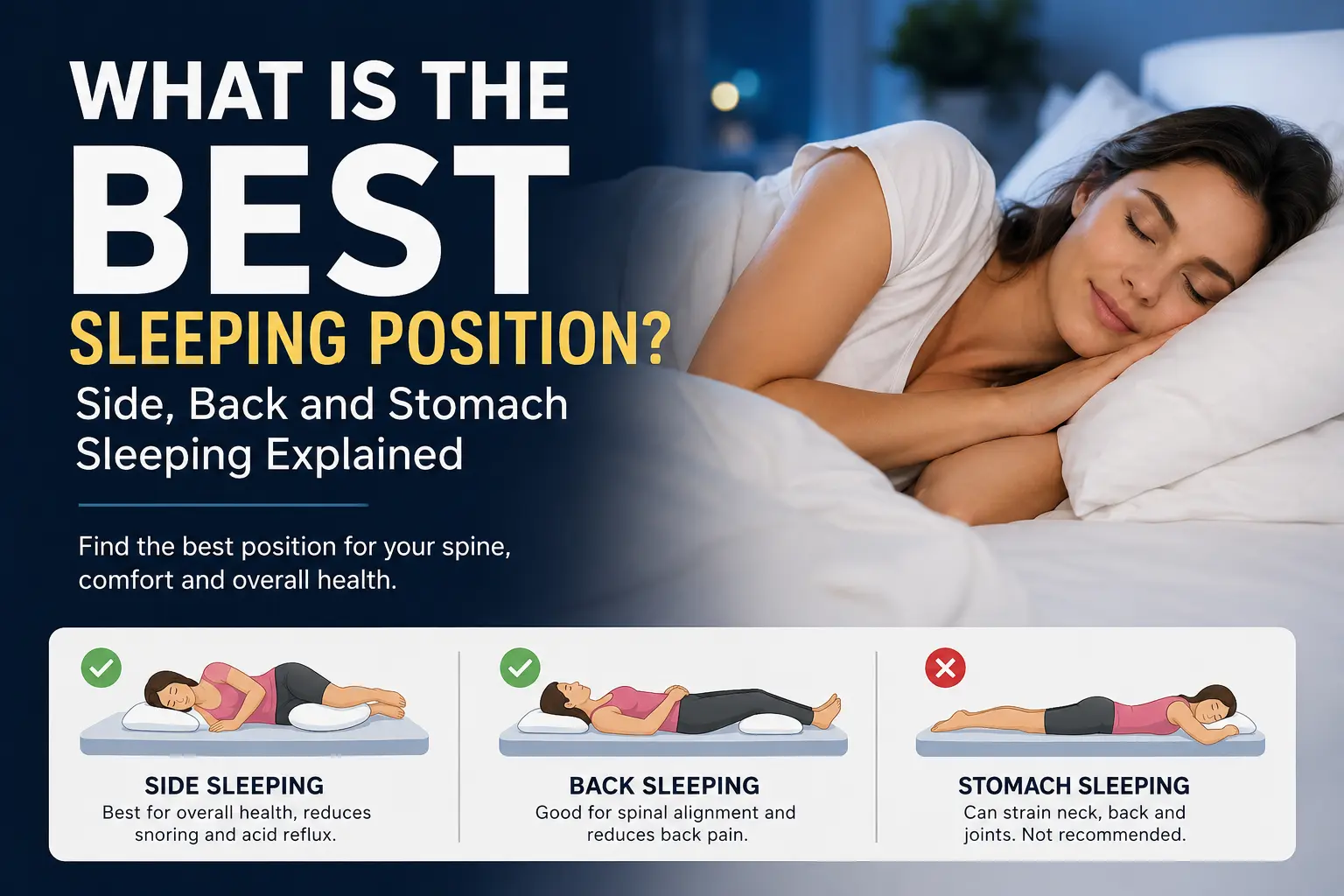
Finding the best sleeping position sounds simple, but the answer is not the same for everyone. The way you sleep can affect your neck, back, breathing, snoring, acid reflux, shoulder comfort and even how rested you feel in the morning.
So, what is the best sleeping position? For many adults, side sleeping is the best overall sleeping position, especially for people who snore, have mild sleep apnea symptoms, experience acid reflux or need extra comfort during pregnancy. Back sleeping can also be a strong option for spinal support, especially when your pillow and mattress keep your body aligned. Stomach sleeping, however, is usually the least recommended because it can place extra stress on the neck and lower back.
The real answer depends on your body, your health needs and how you feel when you wake up. Below, we break down the best sleeping position for back pain, neck pain, snoring, acid reflux, pregnancy and general comfort.
Quick Answer: What Is the Best Sleeping Position?
The best sleeping position for most people is side sleeping with proper pillow support. This position can help keep the spine aligned, reduce pressure on the lower back and make breathing easier during sleep.
If you have lower back pain, sleeping on your side with a pillow between your knees or sleeping on your back with a pillow under your knees may help reduce strain. Mayo Clinic explains that pillow placement can help maintain the natural curve of the back and improve comfort while sleeping.
Still, no sleeping position is perfect for everyone. The goal is to keep your head, neck, spine, hips and knees as naturally aligned as possible.
Best Sleeping Position by Need
| Need or Problem | Best Sleeping Position | Why It May Help |
|---|---|---|
| General comfort | Side or back sleeping | Helps support better spinal alignment |
| Lower back pain | Back with pillow under knees or side with pillow between knees | Reduces pressure on the lower spine and hips |
| Neck pain | Back or side sleeping | Keeps the neck in a more neutral position |
| Snoring | Side sleeping | May help keep the airway more open |
| Sleep apnea symptoms | Side sleeping | Back sleeping can make breathing disruptions worse for some people |
| Acid reflux | Left-side sleeping or elevated upper body | May help reduce nighttime reflux symptoms |
| Pregnancy | Side sleeping | Helps reduce pressure and improve comfort |
| Shoulder pain | Back sleeping or sleeping on the opposite side | Reduces direct pressure on the painful shoulder |
| Stomach sleeping | Usually not recommended | Can strain the neck, shoulders and lower back |
1. Side Sleeping: The Best Overall Position for Many People
Side sleeping is one of the most common and practical sleeping positions. It can support the spine, help reduce snoring and make breathing easier for many people. The Sleep Foundation notes that side sleeping and back sleeping are generally more beneficial than stomach sleeping because they make it easier to support the spine.
Side sleeping may be especially helpful if you deal with:
- Snoring
- Mild sleep apnea symptoms
- Acid reflux
- Pregnancy discomfort
- Lower back or hip pressure
To make side sleeping more comfortable, avoid curling too tightly into a ball. A very tight fetal position can round the back and place extra pressure on the hips. Instead, keep your body relaxed, with your knees slightly bent and your spine as straight as possible.
How to Sleep on Your Side Correctly
For better side sleeping, try these simple adjustments:
- Use a pillow that keeps your neck level with your spine.
- Place a pillow between your knees.
- Keep your hips stacked instead of twisting forward.
- Avoid tucking your chin too close to your chest.
- Use a mattress that supports your shoulders and hips without letting your body sink too deeply.
A pillow between the knees can help keep the pelvis and spine aligned. Mayo Clinic also explains that side sleepers may benefit from using a pillow between the knees to reduce stress on the hips.
2. Left Side vs Right Side: Which Side Should You Sleep On?
Both sides can be comfortable, but the left side may be better for some people, especially those with acid reflux or pregnancy-related discomfort.
Johns Hopkins Medicine explains that sleep position can affect problems such as reflux, snoring, sleep apnea and pain. For people with heartburn or nighttime reflux, left-side sleeping is often a better choice than right-side sleeping.
Here is a simple way to think about it:
- Left side: often better for acid reflux, heartburn and pregnancy comfort.
- Right side: can still be comfortable if it does not trigger reflux or pain.
- Either side: usually offers better spinal support than stomach sleeping.
If one side causes shoulder or hip pain, try switching sides or adding pillow support. The best side is the one that helps you sleep comfortably without waking up stiff or sore.
3. Back Sleeping: Best for Spinal Support and Some Back Pain
Back sleeping can be one of the best sleeping positions for spinal alignment. When done correctly, it distributes body weight more evenly and may reduce pressure on the neck, shoulders and lower back.
Cleveland Clinic notes that back sleeping can be comfortable for people with neck and back pain, especially when pillows are used strategically for support.
How to Sleep on Your Back Correctly
To improve back sleeping, try this setup:
- Use a pillow that supports your neck without pushing your head too far forward.
- Place a pillow under your knees.
- Keep your arms in a relaxed position.
- Avoid a pillow that is too thick.
- Use a mattress that supports your lower back without sagging.
Mayo Clinic recommends placing a pillow under the knees for back sleepers because it can help relax the back muscles and maintain the natural curve of the lower back.
When Back Sleeping May Not Be Best
Back sleeping is not ideal for everyone. If you snore heavily or have obstructive sleep apnea, sleeping flat on your back may make symptoms worse.
The Sleep Foundation explains that side sleeping is generally better than back sleeping for reducing sleep apnea symptoms.
4. Stomach Sleeping: Usually the Worst Sleeping Position
Stomach sleeping may feel comfortable at first, but it is usually the least recommended sleeping position. The biggest issue is neck rotation. To breathe while lying on your stomach, your head usually has to turn to one side for hours. Over time, this can lead to neck stiffness, shoulder tension and lower back discomfort.
Cleveland Clinic warns that stomach sleeping can place extra stress on the back, neck and shoulders.
Why Stomach Sleeping Can Cause Problems
Stomach sleeping may contribute to:
- Neck pain
- Shoulder tension
- Lower back pain
- Numbness or tingling in the arms
- Poor spinal alignment
- Facial pressure from the pillow
If you cannot stop sleeping on your stomach, use a very thin pillow or no pillow under your head. You can also place a pillow under your hips and lower stomach to reduce lower back strain. But if you wake up with pain often, it may be worth gradually training yourself to sleep on your side or back.
Best Sleeping Position for Lower Back Pain
The best sleeping position for lower back pain is usually one of these two options:
- Back sleeping with a pillow under the knees
- Side sleeping with a pillow between the knees
Both positions can reduce pressure on the lower spine and help keep the hips and pelvis aligned. Avoid sleeping twisted, with one leg crossed over the body, or with the stomach and hips sinking too deeply into the mattress.
For more detailed medical guidance, read Mayo Clinic’s guide on sleeping positions that reduce back pain.
Best Sleeping Position for Neck Pain
For neck pain, side sleeping or back sleeping is usually better than stomach sleeping. The most important factor is pillow height.
Your pillow should keep your neck in line with your chest and back. If your pillow is too high, your head tilts upward. If it is too low, your head drops downward. Either problem can create stiffness by morning.
For neck pain, try these tips:
- Back sleepers should use a pillow that supports the natural curve of the neck.
- Side sleepers should use a pillow high enough to fill the space between the shoulder and head.
- Stomach sleepers should try to transition away from stomach sleeping if they wake up with neck pain.
Johns Hopkins Medicine also discusses how sleep position can affect pain, snoring and reflux.
Best Sleeping Position for Snoring
The best sleeping position for snoring is usually side sleeping. When you sleep on your back, gravity can allow the tongue and soft tissues to fall backward, narrowing the airway. This can make snoring louder and may worsen sleep apnea symptoms in some people.
For people who snore, side sleeping may help keep the airway more open. Cleveland Clinic’s sleep experts have also noted that people with obstructive sleep apnea are often advised to avoid sleeping on their backs. You can read more from Cleveland Clinic’s sleep position guidance.
Best Sleeping Position for Acid Reflux
For acid reflux and heartburn, the best sleeping position is often left-side sleeping, especially with the upper body slightly elevated.
Lying flat can make it easier for stomach acid to move upward. Elevating the upper body may help gravity keep acid down. Cleveland Clinic also discusses reflux and sleep position in its guide to the best sleeping positions for different health needs.
If you struggle with reflux at night, try these habits:
- Sleep on your left side.
- Elevate your upper body slightly.
- Avoid large meals close to bedtime.
- Speak with a healthcare professional if reflux happens often.
Best Sleeping Position During Pregnancy
During pregnancy, side sleeping is usually recommended, especially later in pregnancy. Many pregnant people are advised to sleep on their side for comfort and better body support.
Side sleeping can reduce pressure from the belly and make it easier to support the hips, knees and lower back with pillows. Cleveland Clinic also notes that side sleeping is commonly advised during pregnancy in its article on healthy sleep positions.
For more comfort during pregnancy, try using:
- A pillow between the knees
- A pillow under the belly
- A pillow behind the back
- A supportive pregnancy pillow if needed
How to Train Yourself to Change Sleeping Position
Changing your sleeping position takes time. Your body naturally returns to familiar positions during the night, especially during deep sleep. The goal is not to force your body into discomfort, but to make a healthier position feel easier and more natural.
Try these steps:
- Start the night in your target position.
- Use pillows as support barriers.
- Place a pillow between your knees if side sleeping.
- Place a pillow under your knees if back sleeping.
- Avoid forcing a position that creates more pain.
- Give your body several nights to adjust.
If you are trying to stop stomach sleeping, pillows can help prevent you from rolling forward. Cleveland Clinic also suggests using support pillows to help transition away from stomach sleeping in its guide on why sleeping on your stomach can be hard on the body.
Mattress and Pillow Tips for Better Sleep Position
Your sleeping position only works well if your mattress and pillow support it. A poor pillow or sagging mattress can make even a healthy sleeping position uncomfortable.
For Side Sleepers
Choose a pillow that fills the space between your shoulder and head. Your neck should stay level with your spine. A medium-support mattress often works well because it allows the shoulder and hip to sink slightly while keeping the spine supported.
For Back Sleepers
Use a pillow that supports the natural curve of your neck. A pillow under the knees can also reduce lower back tension and help the spine stay in a more comfortable position.
For Stomach Sleepers
Use a thin pillow or no pillow under the head. A firmer mattress may help prevent the hips from sinking too deeply. However, if stomach sleeping causes pain, consider gradually moving toward side or back sleeping.
So, What Is the Best Sleeping Position?
The best sleeping position for most people is side sleeping, especially if you snore, have mild sleep apnea symptoms, experience acid reflux or need pregnancy comfort. Back sleeping can also be excellent for spinal support, especially when a pillow is placed under the knees. Stomach sleeping is usually the least recommended because it can strain the neck and lower back.
But the best sleeping position is personal. The right position is the one that helps you breathe comfortably, keeps your spine supported, reduces pain and allows you to wake up feeling rested.
If you wake up with frequent pain, numbness, loud snoring, breathing pauses or ongoing reflux, speak with a healthcare professional. Sleep position can help, but it should not replace medical advice for persistent symptoms.
FAQ: What Is the Best Sleeping Position?
What is the healthiest sleeping position?
The healthiest sleeping position for many adults is side sleeping because it supports the airway, may reduce snoring and can help with reflux and pregnancy comfort. Back sleeping can also be healthy when the neck and knees are properly supported.
Is it better to sleep on your left or right side?
Left-side sleeping may be better for acid reflux, heartburn and pregnancy comfort. Right-side sleeping can still be fine if it feels comfortable and does not trigger symptoms.
What is the worst sleeping position?
Stomach sleeping is usually considered the worst sleeping position because it can twist the neck and place strain on the back, shoulders and spine.
What is the best sleeping position for back pain?
For back pain, try sleeping on your back with a pillow under your knees or on your side with a pillow between your knees. Both positions can help support spinal alignment.
What is the best sleeping position for snoring?
Side sleeping is usually best for snoring because it can help keep the airway more open compared with sleeping flat on your back.
What is the best sleeping position for acid reflux?
Left-side sleeping with the upper body slightly elevated is often best for acid reflux and nighttime heartburn.
Should I force myself to change sleeping position?
No. If your current sleeping position feels comfortable and you wake up rested, you may not need to change it. But if you wake up with pain, snoring, reflux or stiffness, adjusting your position may help.
Is sleeping without a pillow good?
It depends on your position. Some stomach sleepers may feel less neck strain with a very thin pillow or no pillow, but side and back sleepers usually need pillow support to keep the neck aligned.
Is back sleeping better than side sleeping?
Back sleeping can be better for spinal support, but side sleeping may be better for snoring, sleep apnea symptoms, reflux and pregnancy. The best choice depends on your health needs.
How can I stop sleeping on my stomach?
Use pillows as barriers on both sides of your body, start the night on your side or back and use supportive pillows to make the new position more comfortable.